
Industrial & Manufacturing / Equipment Financing
Manufacturing Equipment Financing: A Decision Guide for Plant Leaders
A decision guide for plant and finance leaders planning new or slightly used machinery, total installed cost, implementation risk, financing structure, and transaction readiness.

12 min read
Key takeaways
- Define the production problem and calculate the total installed and commissioned project cost.
- Test operating assumptions, implementation timing, and cash flow before comparing financing proposals.
- Prepare a complete equipment and financial package; availability and terms remain subject to underwriting and approval.
On this page
Manufacturing equipment financing helps an established business acquire machinery or a production system and pay for it over time under an approved financing structure. The soundness of the project, however, cannot be judged from the machine price or monthly payment alone. Plant leaders should evaluate the complete installed cost, implementation timeline, production assumptions, useful life, service support, cash-flow profile, and ownership objective.
Aspire Finance, LLC is a direct lender. Aspire targets equipment transactions from $50,000 to $20 million and considers opportunities nationwide. Financing availability and terms are subject to underwriting, approval, documentation, and applicable requirements.
The strongest financing request begins with a clearly defined production problem and a complete project scope.
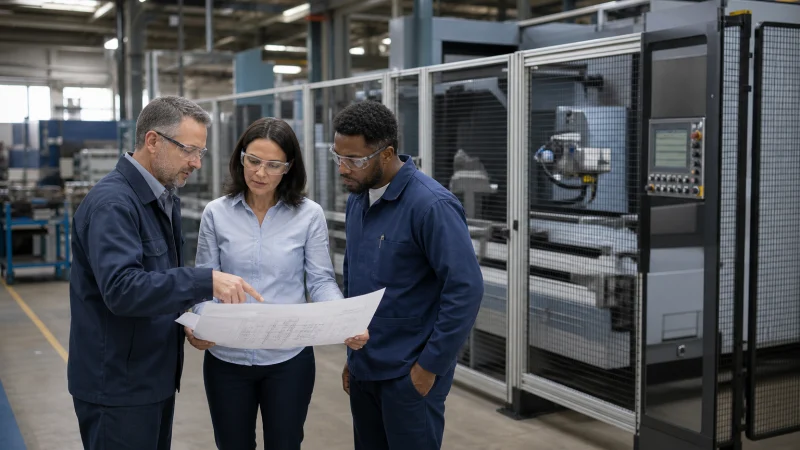
Define the production problem before selecting the financing structure
New equipment can support several different objectives. It may replace an unreliable asset, relieve a bottleneck, add capacity, improve process control, reduce dependence on an outside supplier, or enable a new capability. Those objectives have different risks and evidence requirements.
Identify the constraint or opportunity
Document the current state in operational terms:
- Which process, machine, or external supplier is limiting output?
- Is the problem capacity, uptime, cycle time, yield, quality, safety, labor availability, changeover time, or capability?
- Is the proposed project replacing an asset or adding net capacity?
- What customer demand, backlog, forecast, or contract supports the need?
- Which upstream and downstream processes must also be ready?
Avoid vague claims that a new machine will simply make the plant “more efficient.” A useful acquisition case identifies the specific operating constraint and the measurement that will show whether the project addressed it.
Separate measured facts from forecasts
Historical production, current scrap, actual downtime, labor hours, and booked backlog can be documented. Future utilization, new sales, labor savings, yield improvement, and margin are assumptions.
Use conservative, base, and higher-performance cases. The operating model should show what happens if installation is delayed, demand changes, hiring takes longer, or the equipment needs more ramp time than expected. Financing does not remove those project risks.
Map the implementation dependencies
A machine cannot produce if the facility, workforce, data, utilities, tooling, materials, and adjacent processes are not ready. Before approving the project internally, assign responsibility and timing for:
- engineering and layout;
- floor loading, foundation, and anchoring;
- electrical service, compressed air, ventilation, water, gas, or other utilities;
- tooling, fixtures, workholding, conveyors, robotics, and material handling;
- software, controls, licenses, data collection, and system integration;
- guarding, lockout/tagout procedures, and safety validation;
- freight, rigging, installation, commissioning, and acceptance testing;
- operator, programmer, maintenance, and supervisor training;
- parts, consumables, service, and preventive maintenance; and
- planned downtime, temporary outsourcing, or inventory built before installation.
Calculate the total installed and commissioned project cost
The machine quote is one layer of the investment. A complete budget helps leadership compare financing structures and reduces the likelihood that unplanned costs weaken working capital during implementation.
| Cost layer | Items to investigate |
|---|---|
| Core asset | Machine or line, controls, standard accessories, options, and base software |
| Integration | Tooling, fixtures, robotics, feeders, conveyors, material handling, guarding, inspection, and data connections |
| Facility readiness | Foundation, floor work, electrical, ventilation, compressed air, utilities, network, environmental controls, and permits |
| Deployment | Freight, duties if applicable, insurance in transit, rigging, installation, commissioning, calibration, and acceptance testing |
| Workforce | Operator, programmer, maintenance, safety, quality, and supervisor training |
| Ramp-up | Initial scrap, validation, qualification, temporary outsourcing, excess labor, and reduced output during learning |
| Resilience | Initial spares, consumables, warranty, service agreement, cybersecurity work, and downtime contingency |
| Working capital | Inventory, payroll, deposits, and operating cash needed before the project reaches expected output |
Some project costs may be considered for financing, but invoice cost and financeable cost are not automatically the same. Aspire may consider soft costs such as freight, installation, tooling, tenant improvements, and sometimes sales tax. These costs are typically around 20% and may reach 50% for an appropriate credit, subject to underwriting. That is not a promise to finance a particular cost or percentage.
Build a transparent operating case
A useful capital-project model does not need to be elaborate, but its assumptions should be visible.
Establish the baseline
Record current output, available production hours, uptime, yield, labor, scrap, rework, outsourcing, maintenance, and lost-opportunity costs that are genuinely measurable. Do not assign a dollar value merely because it makes the project look stronger.
Model the future state
For each scenario, document:
- expected production hours and utilization;
- cycle time or capacity assumptions;
- staffing and training requirements;
- expected uptime and planned maintenance;
- yield, scrap, and validation assumptions;
- demand or backlog that will use the capacity;
- one-time implementation costs;
- recurring service, software, energy, labor, and consumable costs; and
- the expected timing of cash receipts and payments.
NIST’s Manufacturing Extension Partnership recommends building the business case for technology adoption around benefits, total investment, and the investment period. Its Manufacturers’ Guide to Industry 4.0 Technologies also reinforces a practical point: the technology must be evaluated as part of the operating system around it.
Stress-test the assumptions
Ask what happens if the project produces less, starts later, or costs more than expected. Show management and the lender how the company will respond. The analysis should also demonstrate the company’s capacity to service existing and proposed debt without treating projected gains as guaranteed.
Compare the principal acquisition structures
Manufacturers should compare the complete documents and business outcomes, not labels alone.
| Structure | Potential business fit | Questions to examine |
|---|---|---|
| Equipment Finance Agreement | The company intends to own a productive asset while paying over time | Ownership, security interest, payment, prepayment, insurance, and default provisions |
| Capital or finance lease | The company expects an ownership-oriented lease structure | Purchase option, end-of-term provisions, useful life, and accounting classification |
| Operating lease | The company values access or end-of-term flexibility | Return, renewal, purchase, use, maintenance, condition, and removal requirements |
| Cash or existing bank capacity | The company can fund the project without a new equipment structure | Effect on liquidity, working capital, and capacity under the senior banking relationship |
Aspire offers Equipment Finance Agreements, capital leases, operating leases, vendor programs, refinancing, sale-leasebacks, cash-out refinancing, asset-acquisition financing, and project financing. The available structure depends on the company, asset, project, documentation, and underwriting.
Review Aspire’s Funding Options and Our Process for more information about how a transaction may be evaluated.
The contract’s commercial label does not determine accounting or tax treatment. FASB’s Topic 842 lease standard distinguishes finance and operating leases for lessee accounting and generally requires recognition of lease assets and liabilities. The IRS’s Publication 946 explains depreciation, Section 179, special depreciation allowances, basis, business-use rules, and recapture. The company’s accounting and tax advisors should analyze its transaction.
Evaluate new or slightly used manufacturing equipment
Aspire focuses on new or slightly used business-critical assets that support revenue production. Aspire does not offer startup, private-party, or auction-purchase financing.
A qualified engineer, integrator, safety professional, or equipment specialist should evaluate the specific asset and installation. The finance team can organize the diligence without pretending to perform that technical work.
For slightly used machinery, consider:
- manufacturer, model, serial number, year, configuration, hours, cycles, and control generation;
- seller/dealer identity and complete transaction documents;
- operating, service, maintenance, repair, and alarm history;
- condition assessment by a qualified equipment professional;
- warranty and service-transfer terms;
- controls, software, licenses, data protocols, and cybersecurity support;
- availability of parts, field service, documentation, and technical support;
- tooling and compatibility with the intended parts, materials, and tolerances;
- guarding and safety-device condition;
- floor, foundation, utilities, ventilation, and environmental requirements;
- de-installation, packing, freight, rigging, reassembly, commissioning, and acceptance;
- remaining useful life, technology obsolescence, and expected removal or resale plan.
The purchase agreement should define what is included, who is responsible for each step, and what acceptance criteria must be met before the equipment is treated as operational.
Treat safety and cybersecurity as project requirements
Safety and cybersecurity can affect equipment scope, implementation timing, ongoing support, and cost. They should not be deferred until the asset reaches the plant floor.
Machine guarding and energy control
OSHA’s machine-guarding requirements address points of operation, rotating parts, flying chips and sparks, and other mechanical hazards. Fixed machinery may also require secure anchoring. Servicing and maintenance can introduce hazardous energy, making the organization’s lockout/tagout program and return-to-service procedures relevant.
These sources do not certify a specific machine or installation. The employer and its qualified safety professionals must determine which standards and controls apply.
Connected equipment and operational technology
Modern machinery may connect to plant networks, cloud services, vendors, and enterprise systems. NIST advises manufacturers to consider cybersecurity at the beginning of an Industry 4.0 investment, not as an afterthought. Its Industry 4.0 cybersecurity guidance highlights the additional risk created by connected automation and equipment monitoring.
Before acquisition, identify supported software, patching responsibilities, vendor remote access, account management, data flows, network segmentation, backups, incident response, and what happens when the product reaches end of support.
Prepare the manufacturing equipment financing package
For transactions of $500,000 and below, Aspire generally requests:
- a completed application;
- the equipment invoice; and
- when there is a personal guarantor, a personal financial statement.
For transactions above $500,000, Aspire generally requests:
- three years of audits, reviews, or tax returns;
- year-to-date financial statements;
- a current debt schedule;
- projections, when available; and
- the equipment invoice.
Requirements can vary by transaction. A strong manufacturing project narrative should also include:
- the equipment, vendor, configuration, and intended location;
- the production problem and measured baseline;
- why the equipment is business-critical and supports revenue production;
- the complete installed-project budget and requested financing;
- deposits, vendor milestones, delivery, installation, and acceptance timing;
- demand, backlog, capacity, and operating assumptions;
- implementation dependencies and responsible parties;
- useful life, service, maintenance, safety, and cybersecurity plans;
- downside scenarios and available operating flexibility; and
- the company’s ability to service existing and proposed obligations.
Smaller transactions can sometimes move faster, but not always. A complete package reduces avoidable questions; it does not create a guaranteed decision or funding timeline.
Compare financing proposals beyond the monthly payment
Review the proposal and final documents with legal, accounting, tax, insurance, and technical professionals as appropriate.
Compare:
- full project cost, amount financed, deposits, and cash required;
- payment schedule and total contractual payments;
- fixed or variable economics, when applicable;
- fees, taxes, interim amounts, and documentation charges;
- progress payments, vendor milestones, and change-order treatment;
- equipment acceptance and the conditions for vendor funding;
- which tooling, software, installation, and other project costs are included;
- collateral, security interests, liens, accessions, fixtures, insurance, and guaranties;
- location, relocation, inspection, maintenance, and reporting requirements;
- prepayment, early termination, renewal, purchase, return, and removal provisions;
- default provisions and remedies; and
- state-specific commercial-financing disclosures.
A smaller monthly payment can reflect a longer obligation, a different end-of-term position, or other contractual differences. Compare total economics and operational fit.
Total Manufacturing Acquisition Cost Framework
Use this worksheet before requesting financing proposals.
1. Production problem and baseline
- Constraint or opportunity:
- Current measured output, uptime, yield, labor, scrap, or outsourcing:
- Replacement, capacity, capability, safety, or risk-reduction project:
- Demand or backlog support:
2. Core machine and integration
- Machine, line, controls, options, and accessories:
- Tooling, fixtures, workholding, inspection, robotics, conveyors, or feeders:
- Software, licenses, data integration, and cybersecurity:
- Upstream and downstream process changes:
3. Deployment and facility readiness
- Freight, rigging, foundation, electrical, ventilation, and utilities:
- Installation, commissioning, validation, and acceptance:
- Guarding, energy control, permits, and professional services:
- Responsible owner and due date for each dependency:
4. Ramp-up and cash flow
- Planned downtime and temporary production plan:
- Training, staffing, and qualification:
- Initial scrap, validation, and expected ramp curve:
- Working capital required before stable output:
5. Lifecycle and resilience
- Expected useful period and ownership objective:
- Service, spares, preventive maintenance, and warranty:
- Controls/software support and obsolescence:
- Removal, relocation, and resale assumptions:
6. Financing preferences
- Project amount and requested financing:
- Cash available without weakening operations:
- Payment pattern desired, subject to availability:
- End-of-term outcomes the company can accept:
7. Readiness
- Complete vendor quote and project budget:
- Financial statements, tax returns, and debt schedule current:
- Projections and assumptions documented:
- Engineering, safety, cyber, insurance, accounting, tax, and legal reviews assigned:
- Open dependencies and contingency plan:
If the production case, total cost, implementation plan, asset support, and financial package are clear, the project may be ready for a lender discussion. If the machine is defined but the system around it is not, complete that work before treating the project as finance-ready.
Common manufacturing equipment planning mistakes
- Financing the machine invoice while underbudgeting the production system
- Using optimistic output assumptions without mapping upstream and downstream constraints
- Ignoring downtime, commissioning, validation, training, and ramp working capital
- Treating custom or integrated equipment as easy to relocate or resell
- Failing to confirm controls, software, parts, service, or cybersecurity support
- Addressing guarding and hazardous-energy controls after purchase
- Assuming tax or accounting treatment from a product label
- Applying before the complete vendor, project, and financial package is ready
Frequently asked questions
How does manufacturing equipment financing work?
The manufacturer defines the equipment and complete project, documents its business purpose and financial capacity, and supplies the required financial and transaction information. The lender evaluates the company, asset, project, seller, structure, and documents. Availability and terms are subject to underwriting and final approval.
What costs belong in a manufacturing equipment project?
Consider the core machinery plus tooling, integration, facility work, freight, rigging, installation, commissioning, software, cybersecurity, training, downtime, validation, service, spares, contingency, and ramp-up working capital. Not every cost will necessarily be financeable.
Can slightly used industrial machinery be financed?
Aspire focuses on new or slightly used business-critical equipment. Seller eligibility, equipment condition, age, control support, useful life, service availability, project scope, and documentation all matter. Aspire does not finance private-party or auction purchases.
What documents should a manufacturer prepare?
Start with the complete vendor quote, project budget, implementation schedule, business-purpose explanation, current financial information, debt schedule, and documented operating assumptions. Aspire’s general financial-document requirements differ for transactions at or below $500,000 and those above $500,000.
Is a lease always better when equipment may become obsolete?
No. Useful life, customization, removal cost, expected hold period, end-of-term requirements, total economics, and ownership goals all matter. Accounting and tax professionals should assess classification and treatment.
Discuss a manufacturing equipment project
A finance-ready manufacturing project connects a measurable production need with a complete installed cost, realistic implementation plan, lifecycle diligence, and the company’s capacity to manage the obligation.
If your company has identified new or slightly used manufacturing equipment and wants to evaluate an appropriate financing structure, contact Aspire Finance to discuss the project.
If the project is defined and the requested information is ready, you may also begin an application.
*This article is for general educational purposes and does not constitute legal, tax, accounting, engineering, safety, cybersecurity, or financial advice. Financing availability and terms are subject to underwriting, approval, documentation, and applicable requirements. Consult your professional advisors regarding your circumstances.*
Sources
- NIST Manufacturing Extension Partnership: Manufacturers’ Guide to Industry 4.0 Technologies
- NIST: Industry 4.0 and Cybersecurity—How to Protect Your Investment
- NIST: Five Simple Digital Applications That Are Changing Manufacturing
- Occupational Safety and Health Administration: Machine Guarding General Requirements
- Occupational Safety and Health Administration: Machine Guarding Safety Considerations
- U.S. Census Bureau: Capital Expenditures AIES
- Financial Accounting Standards Board: Accounting Standards Update 2016-02, Leases (Topic 842)
- Internal Revenue Service: Publication 946, How To Depreciate Property
- Consumer Financial Protection Bureau: State Disclosure Laws on Business Lending
—
About Tim Olson
Tim Olson is Managing Partner at Aspire Finance. He began his finance career with US Bank in 2013 and subsequently spent seven years in equipment finance, serving small businesses and middle-market companies. He brings over a decade of finance experience to helping businesses plan strategic capital investments in equipment.
View author profile and articlesYour next equipment investment
Turn a defined project into a financing conversation.
Discuss your equipment, business needs, and transaction readiness with Aspire Finance.
Discuss your equipment project Ready to apply? Start an applicationFinancing availability and terms are subject to underwriting, approval, documentation, and applicable requirements.